Copper acetate (Cu(CH₃COO)₂) – product information, price, where to buy | Manufacturer and distributor
Copper acetate (Cu(CH₃COO)₂) – high purity, competitive price, 24-hour delivery. We are an experienced distributor of chemical raw materials, offering copper acetate in various grades: technical, pure, pro analysi (p.a.), and ACS.
Our copper acetate is designed for the chemical industry, agriculture, research laboratories, pigment manufacturers, and companies in the ceramics and arts sectors. We include a certificate of analysis (CoA), a safety data sheet (SDS), and complete technical documentation with every shipment. We guarantee consistent quality across batches, competitive wholesale prices, and technical support.
Main applications: catalyst in organic syntheses, fungicide in plant protection, ceramic and artistic pigments, analytical reagent, dye production, wood preservation, and synthesis of copper compounds.
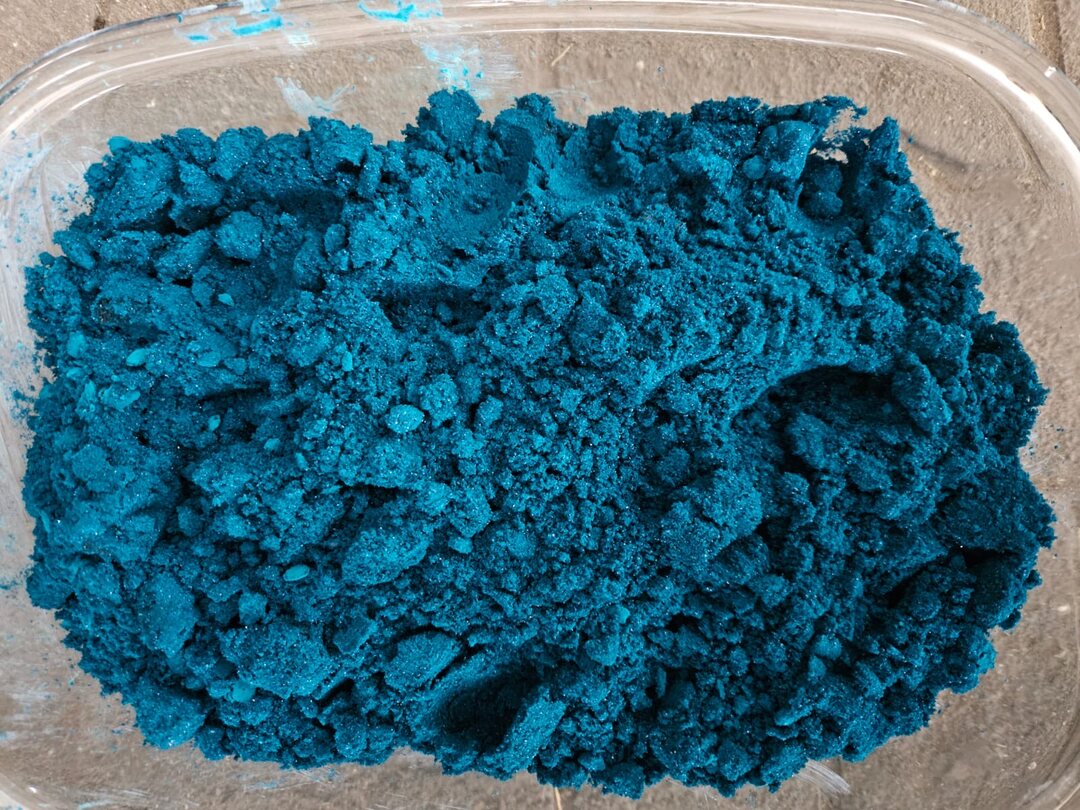
Basic Specifications – Copper Acetate Cu(CH₃COO)₂
| Chemical name | Copper(II) acetate |
|---|---|
| Synonyms | Copper acetate, Cupric acetate |
| Chemical formula | Cu(CH₃COO)₂ (anhydrous), Cu(CH₃COO)₂·H₂O (monohydrate) |
| CAS Number | 142-71-2 (anhydrous), 6046-93-1 (monohydrate) |
| EC Number (EINECS) | 205-553-3 (anhydrous), 200-487-6 (monohydrate) |
| Molar mass | 181.63 g/mol (anhydrous), 199.65 g/mol (monohydrate) |
| Form | Blue-green crystals (monohydrate), dark green powder (anhydrous) |
| Available Purity Grades | Technical / Pure / Pro Analysi (p.a.) / ACS / Extra Pure |
| Solubility | Good in water (72 g/100 mL at 20°C), good in ethanol, poor in ether |
| Decomposition temperature | 240–250°C |
| Available packaging | 100 g / 250 g / 500 g / 1 kg / 5 kg / 25 kg (bags) |
| Documentation | SDS, CoA, Technical Specifications |
B2B Terms of Cooperation – Wholesale Copper Acetate
Why work with us?
- Wholesale deliveries – orders starting at 1 kg, delivery throughout Poland and the EU, ADR transport
- Volume discounts – up to 15% off for larger orders
- Batch consistency – every shipment includes a CoA and LOT number, quality guaranteed
- Short lead time – in-stock products shipped within 24–48 hours
- Fixed-term contracts – framework agreements with fixed prices for 6–12 months
- Technical support – assistance with product selection and process optimization
- Trade credit – flexible payment terms for regular customers
Do you need copper acetate?
Contact us!
Ask about current prices, availability, and wholesale discounts. We’ll respond within 24 hours.
Copper acetate – price and pricing factors
The price of copper acetate depends on several key factors:
- Chemical purity: p.a. and ACS grades are more expensive than technical grades
- Product form: monohydrate vs. anhydrous
- Order size: the price per kg decreases with larger quantities (volume discounts)
- Current copper price: quotes on metal exchanges
- Packaging: standard vs. specialized
- Documentation: Additional certificates (GMP, agricultural certificates) may affect the price
Retail orders (100–1,000 g): from several dozen to several hundred zlotys
Wholesale orders (25+ kg): custom pricing with a discount
Do you need copper acetate? Contact us!
Ask about current prices, availability, and wholesale discounts. We’ll respond within 24 hours.
Copper acetate—where to buy? Ask for a quote!
Order a sample or request a wholesale quote
We offer free samples of copper acetate (50–250 g) for quality testing before placing a larger order. For B2B customers, we prepare customized quotes that take into account:
- Order volume and frequency
- Documentation and certification requirements
- Special technical requirements (purity, product form)
Contact us—we’ll respond within 24 hours!
Contact Information
Phone: +48 724 967 482
Email: biuro@elpolap.com.pl
Address:
Nowa Wieś Królewska 46, Września County / PL
Sales Department Hours:
Monday–Friday: 8:00 a.m.–4:00 p.m.
What is copper acetate?
Definition and chemical formula: Cu(CH₃COO)₂
Copper acetate is an inorganic chemical compound with the formula Cu(CH₃COO)₂, which is a salt of acetic acid and copper in the +2 oxidation state. It most commonly occurs in the anhydrous form and as the monohydrate Cu(CH₃COO)₂·H₂O, characterized by the intense blue-green color of its crystals.
Occurrence and General Characteristics of the Compound
In nature, copper acetate is extremely rare, occurring mainly as the mineral hoganite (a rare copper(II) acetate mineral); however, its occurrence is marginal and has no industrial significance. In industrial and laboratory practice, only synthetic forms of this compound are used, valued for their catalytic and fungicidal properties. The substance is highly soluble in water and polar organic solvents.
Do you need copper acetate?
Contact us!
Ask about current prices, availability, and wholesale discounts. We’ll respond within 24 hours.
Applications of copper acetate
Copper acetate in the chemical industry (catalyst, synthesis)
In the chemical industry, copper acetate acts as a catalyst in oxidation and organic coupling reactions. It is used in polymer synthesis, dye production, and as a precursor for other copper compounds. Its catalytic properties are utilized, among other things, in Ullmann reactions and pharmaceutical syntheses.
Agricultural Applications – Fungicide and Plant Protection
The agricultural use of copper acetate includes its application as an effective fungicide to protect plants against fungal diseases. It is used in formulations to control late blight in potatoes, powdery mildew in grapevines, and other plant pathogens. Due to its toxicity, strict usage guidelines must be followed.
Pigments—Applications in Art, Paints, Ceramics, and Glass
The characteristic blue-green hue of copper acetate is used in the production of artistic pigments, ceramic paints, and glass coloring. In art conservation, it serves as a component of patinas and preservatives for metal objects.
Do you need copper acetate?
Contact us!
Ask about current prices, availability, and wholesale discounts. We’ll respond within 24 hours.
Methods for Producing Copper Acetate
Reaction of metallic copper with acetic acid and an oxidizing agent
The basic method for producing copper acetate involves reacting metallic copper with acetic acid in the presence of an oxidizing agent, such as hydrogen peroxide or atmospheric oxygen. The process is carried out at room temperature or with gentle heating, which accelerates the reaction.
Preparation of copper(II) acetate: anhydrous and monohydrate forms
Copper(II) acetate can be obtained by evaporating an aqueous solution to yield the monohydrate, or by dehydration at elevated temperatures to yield the anhydrous form. Controlling the crystallization conditions allows for the production of a product with the desired purity and crystal morphology.
Physicochemical Properties of Copper Acetate (Properties of Copper Acetate)
Appearance, color, crystalline form
Copper(II) acetate monohydrate forms dark blue or blue-green crystals with a monoclinic crystal system. The anhydrous form is characterized by a dark green color and greater hygroscopicity. When fresh and dry, the substance has a barely perceptible odor; however, upon contact with moisture, it releases a characteristic acetic acid odor.
Solubility and Stability
The compound is highly soluble in water (approximately 72 g/100 mL at 20°C) and ethanol, and slightly soluble in ether. It is stable in dry air; in a humid environment, it may undergo partial decomposition with the release of acetic acid.
Thermal Stability of Copper Acetate
Copper acetate is stable at room temperature. Thermal decomposition occurs in the range of 240–250°C, leading to the formation of copper oxides, water, and acetic acid decomposition products.
Chemical reactivity and characteristic reactions
Copper acetate reacts with bases to form a blue precipitate of copper(II) hydroxide; with hydrogen sulfide, it forms black copper(II) sulfide. It exhibits the typical properties of copper(II) salts in ion-exchange and complexation reactions.
Safety of copper acetate use (copper acetate toxicity)
CLP/GHS Classification and Hazards
According to the CLP Regulation, copper acetate is classified as a substance harmful to the aquatic environment (Category 1) and as a skin and eye irritant. It requires labeling with hazard pictograms and appropriate hazard statements (H and P).
Precautions and Guidelines for Handling the Substance
When working with copper acetate, wear protective gloves, goggles, and lab coats. Avoid inhaling dust and skin contact. Conduct work in well-ventilated areas or under a laboratory fume hood.
Storage and Disposal
Store the substance in tightly sealed containers, away from sources of heat and moisture. Dispose of it in accordance with local regulations regarding chemical waste; do not pour it down the drain due to its toxicity to aquatic organisms.
Do you need copper acetate?
Contact us!
Ask about current prices, availability, and wholesale discounts. We’ll respond within 24 hours.
Documentation and Technical Data
Safety Data Sheet (SDS)
The Safety Data Sheet (SDS) contains comprehensive information on physicochemical properties, hazards, precautions, and emergency procedures. Available from the manufacturer or distributor before first use of the product.
CAS Number, EC Number, Structural Formula
Copper(II) acetate monohydrate has CAS number 6046-93-1 and EC number 200-487-6. The molar mass is 199.65 g/mol for the monohydrate. The structural formula shows a copper(II) ion coordinated by two acetate anions.
Available Purities and Product Forms
The product is available in the following purities: technical grade, pure (p.a.), analytical grade (p.a. ACS), and extra pure. Forms: crystalline monohydrate, anhydrous form, and aqueous solutions of specified concentrations.
Where to buy copper acetate?
Laboratory and industrial availability
Copper acetate is available from chemical reagent distributors, both in laboratory packaging (starting at 100 g) and industrial packaging (25 kg bags). Purchase requires company registration and compliance with regulations governing the trade in chemical substances.
Factors affecting price
The price depends on the product’s purity, form (anhydrous is more expensive than monohydrate), package size, and quality certification. ACS-grade products and those with analytical-grade purity are significantly more expensive than technical-grade products.
Wholesale and B2B Orders
Companies offer preferential terms for wholesale orders, the ability to negotiate prices, and just-in-time delivery. B2B partnerships often include flexible payment options and technical support.
Frequently Asked Questions (FAQ)
What is copper acetate?
Copper acetate is an inorganic chemical compound that is a salt of acetic acid and copper(II).
It occurs in an anhydrous form and as a monohydrate, forming characteristic blue-green crystals.
The compound dissolves well in water, forming intensely blue solutions.
It is used in many industries and in scientific research.What is copper acetate used for?
Copper acetate is used as a catalyst in organic syntheses and oxidation processes,
as a fungicide in agriculture, as a pigment in ceramics and the visual arts, and as a reagent
in chemistry laboratories. It is also used in wood preservation and certain
textile processing methods.How is copper acetate produced?
Copper acetate can be produced by reacting copper(II) compounds with acetic acid or its salts.
In industrial and laboratory chemistry, various general synthesis methods are used, based on
acid-base and oxidation reactions. The final product is copper acetate crystals, which are separated
and purified using appropriate techniques.Is copper acetate toxic?
Copper acetate is a highly toxic substance. It can cause skin and eye irritation,
and ingestion leads to acute health problems. It is also highly toxic
to aquatic organisms. When working with it, gloves, safety goggles, and
protective clothing should be worn, and proper ventilation should be ensured.At what temperature does copper acetate decompose?
The thermal decomposition of copper acetate typically begins at a temperature of about 240–250°C.
Initially, the compound loses its water of crystallization, and then undergoes further chemical transformations,
leading to the formation of copper oxides and decomposition products of the acetate groups.How is copper acetate crystallized?
The crystallization of copper acetate is usually carried out by slowly evaporating its aqueous solution
or by controlled cooling of a saturated solution. Slow processes promote the formation of larger
and purer crystals. This technique is a common method for purifying chemical compounds
under laboratory conditions.What should copper acetate not be mixed with?
Copper acetate should not come into contact with strong oxidizing agents, acids, or bases,
as this can lead to violent or undesirable chemical reactions.
Contact with reactive metals should also be avoided, and the compound should be stored
in dry, airtight containers.What happens when copper acetate is heated?
When copper acetate is heated, dehydration occurs first, followed,
at higher temperatures, by thermal decomposition. This produces copper oxides and gases
resulting from the decomposition of the acetate groups. The process is irreversible and leads to
a complete loss of the compound’s original chemical structure.Where can you buy copper acetate?
Copper acetate can be purchased from Elpolap Sp. z o.o.,
a company specializing in the production and distribution of chemical raw materials.
The company offers both large industrial batches and smaller quantities tailored
to customer needs. Elpolap ensures proven product quality, technical support,
and professional service for industries such as agriculture, the food industry, and the cosmetics industry.
Contact us for a quote
Order a sample and receive a wholesale quote
We offer copper acetate samples in small quantities (50–250 g) for preliminary laboratory testing and parameter verification before placing a larger order. Business customers can count on customized price quotes that take into account delivery volume, fulfillment schedules, and the specifics of the required technical documentation. We guarantee comprehensive technical consulting, support in selecting the right product form, and assistance in analyzing safety data sheets. Contact us for a quote tailored to your requirements.
Contact form / contact information
Phone:
724 967 482
Email:
kontakt@elpolap.com.pl
Address:
Nowa Wieś Królewska 46,
62-304 Nowa Wieś Królewska
Sales department hours: Monday–Friday, 8:00 a.m.–4:00 p.m.
We respond to inquiries within 24 business hours.
This information is for technical and sales purposes only. It does not constitute an offer under the Civil Code. All specifications and technical data are subject to change without prior notice.
Zobacz inne surowce chemiczne
Silver nitrate
A compound with antibacterial and catalytic properties. Used in the technical industry as a silvering agent.